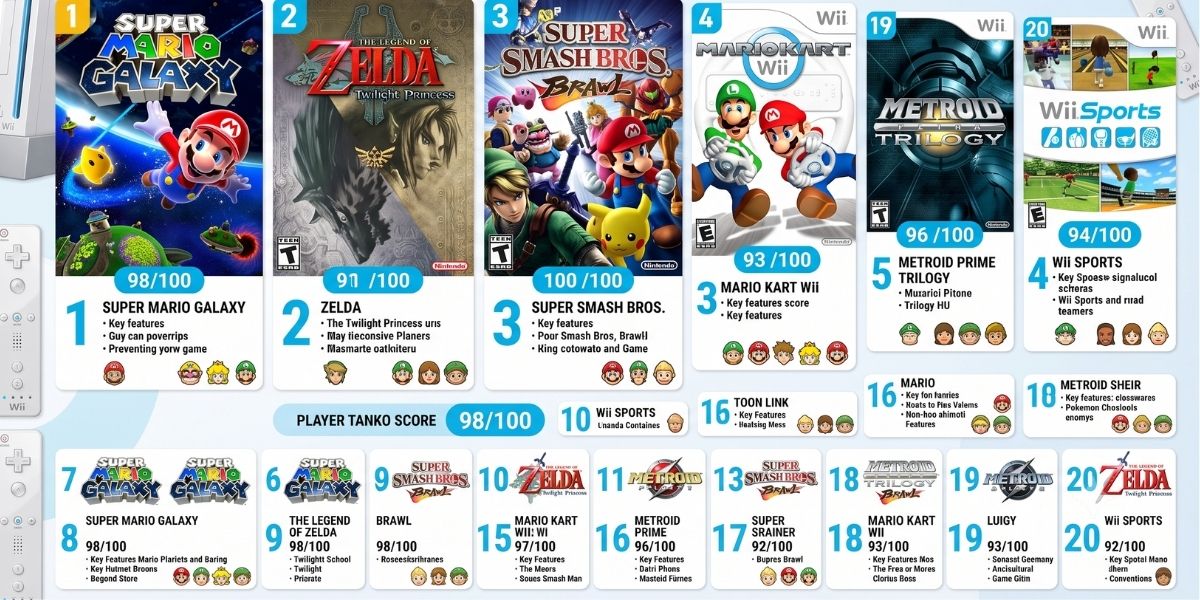
The Wii sold over 100 million units, introduced an entire generation to motion controls, and spent its whole life being underestimated by people who confused "accessible" with "not serious." Those people missed one of the strongest game libraries in Nintendo history, and they're probably still mad about it.
Some of these games have aged. Some of them were born timeless. Here are the best Wii games, ranked by quality, legacy, and whether they're still worth playing today, which for the best of this list, the answer is an aggressive yes.
Tier One: The Untouchables
Super Mario Galaxy
The single greatest 3D platformer ever made on a console that shouldn't have been able to run it. Galaxy took Mario into space, made gravity a game mechanic, turned every planet into a puzzle box, and shipped with a soundtrack that belongs in a concert hall. The level design is so inventive that individual stages would be the highlight of lesser games. Monolith Soft and Nintendo EAD built something that transcended the hardware, and it still plays beautifully today on Switch via the 3D All-Stars collection (if you can find a copy) or the Wii original.
Why it holds up: the controls are tight, the camera is the best in any 3D Mario, and the creativity per hour is unmatched in the genre making it one of the best wii games.
Super Mario Galaxy 2
Nintendo's victory lap. Take everything Galaxy did, add Yoshi, add harder levels, add the kind of confidence that comes from knowing you already built a masterpiece and can now just have fun. Galaxy 2 is arguably the more consistently excellent game, with less downtime between ideas and a difficulty curve that actually challenges veterans. The fact that it only exists on the Wii (no Switch port as of this writing) makes the original console the only way to play it, which alone justifies owning one.
Why it holds up: it's Galaxy with better pacing, and Galaxy was already a 10.
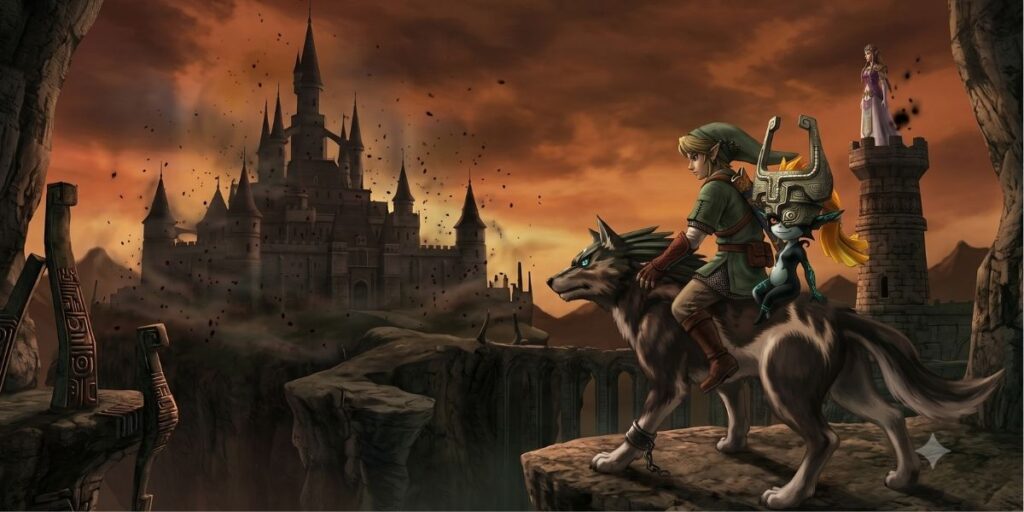
The Legend of Zelda: Twilight Princess
The dark, cinematic Zelda that the GameCube promised and the Wii delivered with motion controls that actually improved the combat. Twilight Princess has the best dungeons in the 3D Zelda canon (Arbiter's Grounds, Snowpeak Ruins, the City in the Sky), a companion in Midna who earned her emotional weight, and a world that felt dangerous in ways Zelda hadn't attempted since Majora's Mask. The Wii version's pointer aiming made the bow and clawshot feel better than any dual-stick equivalent, and the orchestral-adjacent soundtrack is among the series' best.
Why it holds up: the dungeons remain unmatched, and Midna is still one of Nintendo's best-written characters.
The Legend of Zelda: Skyward Sword
The Zelda that split the fanbase and deserved better. Skyward Sword required the Wii MotionPlus for one-to-one sword control, and when it worked (which was most of the time), the combat was the most engaging in any Zelda game: enemies had directional guards, puzzles required specific slash angles, and boss fights were legitimate duels. The sky exploration was divisive (empty, the critics said; atmospheric, the defenders replied), but the ground-level dungeons, particularly the Ancient Cistern and Sandship, are masterclass. The Switch HD remaster fixed the controls for skeptics, but the Wii original with MotionPlus is the definitive way to feel what Nintendo was actually going for.
Why it holds up: the combat system is still the most mechanically ambitious in the franchise which is why it's include in this list of best wii games.
Tier Two: Essential Plays
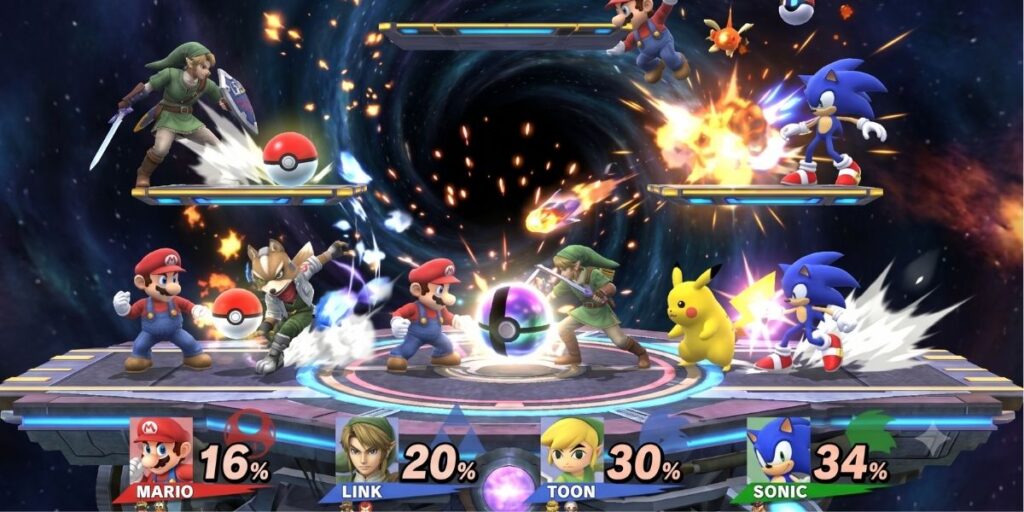
Super Smash Bros. Brawl
The Smash game that introduced online play, the Subspace Emissary story mode (a full co-op platformer hidden inside a fighting game), and Solid Snake to the roster, which was the most unexpected crossover in gaming at the time and a preview of the "everyone is here" philosophy Ultimate perfected. Brawl's competitive meta was famously broken (Meta Knight dominated, tripping existed, the speed was slower than Melee), but as a package of content, characters, and modes, it was the most generous fighting game of its generation.
Why it holds up: Subspace Emissary is still the best single-player mode Smash has ever had, and the roster additions (Snake, Sonic, Pit) changed the franchise forever.
Mario Kart Wii
The best-selling racing game of all time, and not by accident. Mario Kart Wii introduced the Wii Wheel, 12-player races, and the most chaotic item balance in the series, which competitive players hated and everyone else loved. The track selection is among the franchise's best (Coconut Mall, Maple Treeway, Mushroom Gorge all became instant classics), the online community outlasted the official servers by years through fan-run alternatives, and the time-trial scene remains active to this day. Funky Kong on the Flame Runner was the meta, and if you know, you know.
Why it holds up: the track design is still referenced in every Mario Kart since, and the chaos is the point.
Metroid Prime 3: Corruption
The conclusion of the Prime trilogy and the game that proved motion controls could serve a hardcore audience. Pointer aiming on the Wii Remote was genuinely superior to dual-stick for a first-person game, and Retro Studios used it to build the most action-forward Prime entry, with a corrupted-Samus arc that gave the series its most personal story. The Metroid Prime Trilogy collection (also on Wii) is the definitive way to play all three, and it's one of the most valuable physical Wii discs on the secondary market for good reason.
Why it holds up: the pointer controls still feel better than any controller-based FPS aiming.
Donkey Kong Country Returns
Retro Studios' revival of the DKC franchise, and a reminder that 2D platformers could still be brutally, joyfully difficult on a console marketed to grandparents. The level design ramps from approachable to punishing with a grace that keeps you blaming yourself rather than the game, and the silhouette levels (where the action plays out in shadow against a lit background) are some of the most visually striking stages Nintendo has ever published. The 3DS port added an easy mode; the Wii original didn't need one.
Why it holds up: the difficulty curve is perfectly calibrated, and the visual design still slaps making it one of the best wii games.
Xenoblade Chronicles
The JRPG that almost didn't leave Japan and became one of the most important games of its generation. Xenoblade Chronicles built an open world on the bodies of two frozen titans, filled it with a real-time combat system that rewarded positioning and party synergy, and told a story with genuine twists that the 60-hour runtime earned. It launched the Xeno franchise's modern era (Xenoblade 2 and 3 on Switch followed) and proved the Wii could run a world this ambitious, barely. The Definitive Edition on Switch is the easier way to play it now, but the Wii original is the version that earned the cult following.
Why it holds up: the world design and story are timeless, and the combat system influenced a generation of JRPGs.
Tier Three: Deep Cuts Worth Your Time
Wii Sports / Wii Sports Resort
The game that sold the console and the sequel that justified the MotionPlus. Wii Sports is the most important pack-in game since Super Mario Bros. on the NES: bowling, tennis, and boxing converted millions of non-gamers into Wii owners overnight. Resort expanded it with swordplay, archery, and island exploration that was better than it had any right to be. Neither is a "deep" game, but both are masterworks of accessibility, and the memories they created in living rooms worldwide are a form of cultural legacy that most "serious" games would trade their entire budgets for making it one of the best wii games.
New Super Mario Bros. Wii
The game that proved 2D Mario could sell 30 million copies in the modern era and the title that created the "New Super Mario Bros." template Nintendo would lean on for a decade. Four-player co-op was revelatory and destructive in equal measure (picking up your friends and throwing them into pits was not a feature, but it was the feature), and the level design, while not as inventive as Galaxy, was consistently excellent.
Fire Emblem: Radiant Dawn
The sequel to Path of Radiance and one of the most ambitious strategy RPGs on any platform. Multiple armies, branching perspectives, and a difficulty level that doesn't apologize. It's expensive on the secondary market because it deserves to be.
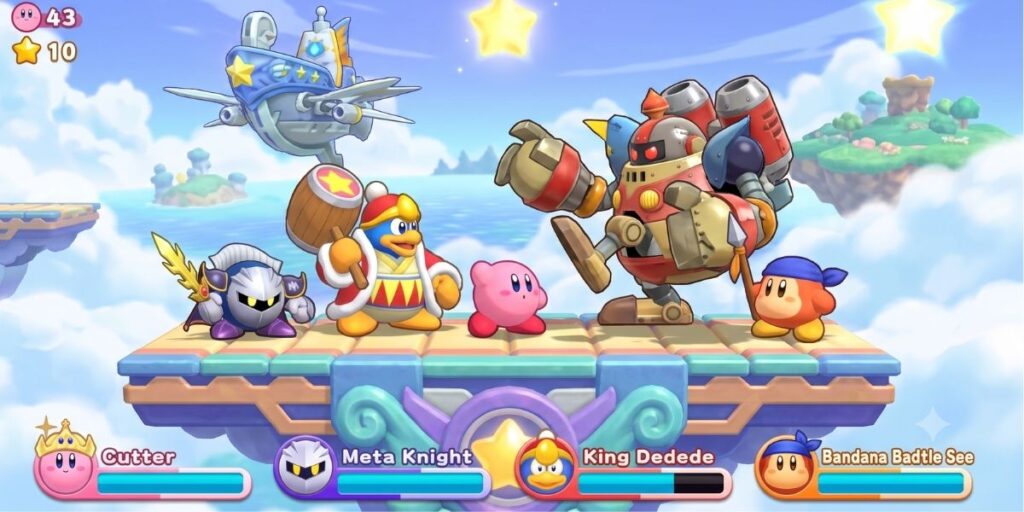
Kirby's Return to Dream Land
The co-op Kirby that set the template for every Kirby game since. Four-player platforming, copy abilities at their most fun, and the kind of polish that Nintendo's B-tier franchises receive on their best days. Quietly excellent.
No More Heroes
Suda51's punk-rock action game about an otaku who buys a beam katana off the internet and murders his way up an assassin ranking. It's crude, stylish, self-aware, and utterly unlike anything else on the console, so it had to be included in this list of best wii games. The motion-control finishing moves were the most satisfying use of the Wii Remote in any mature-rated game, and the open-world Santa Destroy (empty and deliberately boring between missions) was either a budget constraint or a satirical commentary on open worlds. Knowing Suda, both.
MadWorld
A black-and-white beat-em-up by PlatinumGames where the only color is red and the entire game is structured as a game show about murder. It lasted about six hours, sold poorly, and is remembered fondly by everyone who played it because nothing else on the Wii (or anywhere) looked, sounded, or played like it.
The Takeaway
The best Wii games hold up because the console's limitations forced creativity that raw power never does. Galaxy is still the best 3D platformer. Twilight Princess still has the best dungeons. Mario Kart Wii is still the most fun you'll have losing a race to a blue shell at 12 players. The motion controls aged unevenly, but the design didn't, and the library rewards anyone willing to look past the Wii's reputation as a "casual" console.
The Wii was never casual. It just let casual players in. The games behind the door were always serious, and the best of them are still some of the best Nintendo has ever made.

AKA RogueSignal. PlayStation and Nintendo lead. 130+ platinums, every mainline Zelda finished twice, and a rule he never breaks: don’t publish on a game you haven’t completed. Specializes in narrative-driven games, RPGs, and the kind of completionist runs that make people ask if he’s alright. Learn More About Micah