The GameCube sold roughly 22 million units, which made it a commercial disappointment by Nintendo standards and a cult object by everyone else's. The little purple lunchbox with the carrying handle was underpowered against the PS2, outsold by the original XBOX, and home to a game library so stacked with quality that collectors now pay absurd prices for discs that were in bargain bins fifteen years ago.
Here are the best GameCube games, ranked by lasting quality rather than nostalgia goggles, though we won't pretend the nostalgia isn't part of the appeal. Everything on this list either holds up mechanically, still offers an experience you can't get elsewhere, or both.
The Untouchables
Super Smash Bros. Melee
The fastest, most mechanically deep Smash Bros game ever made, and the one that accidentally created a competitive fighting game community that's still running tournaments over two decades later. Melee's advanced techniques (wavedashing, L-canceling, dash dancing) were never intended by the developers and were never replicated in any sequel, which is why a subset of the fighting game community treats this specific GameCube title as a separate franchise from the rest of Smash. The single-player content is generous (Adventure Mode, Event Matches, Break the Targets per character), the roster was revelatory at the time (26 characters felt enormous), and the game speed makes every subsequent Smash feel like it's running through water.
Why you should still play it: if you have any interest in competitive platform fighters, Melee is the origin point and still the benchmark. If you just want a great party game, it's also that.
The Legend of Zelda: The Wind Waker
The Zelda that was hated for its art style and then vindicated by time more thoroughly than any game in the series. Wind Waker's cel-shaded visuals were controversial at reveal ("Celda," the internet said, hilariously wrong) and are now the reason the game looks better than almost everything from its generation. The art direction is timeless because it was never trying to be realistic. Beyond the visuals, the ocean exploration was genuinely innovative, the dungeons are excellent (the Forbidden Fortress, the Tower of the Gods, the Earth Temple), and the final boss fight with Ganondorf remains the most emotionally resonant encounter in any Zelda game. The HD remaster on Wii U smoothed the sailing; the GameCube original has the purity.
Why you should still play Zelda- - the best gamecube games: it's one of the most beautiful games ever made, and the story hits harder as an adult.
Metroid Prime
The game that proved first-person Metroid could work and then proved it could be a masterpiece. Retro Studios (an unproven Texas developer at the time) took a 2D exploration franchise and rebuilt it in 3D without losing the isolation, the atmosphere, or the satisfaction of finding a new ability and immediately knowing which locked door it opens. Tallon IV is one of the great game worlds: every room connects, every upgrade changes how you see the map, and the scan visor turns exploration into environmental storytelling. The Remastered version on Switch is the current best way to play, but the GameCube original is where the legend started.
Why you should still play it: there is still no better first-person exploration game.
Resident Evil 4
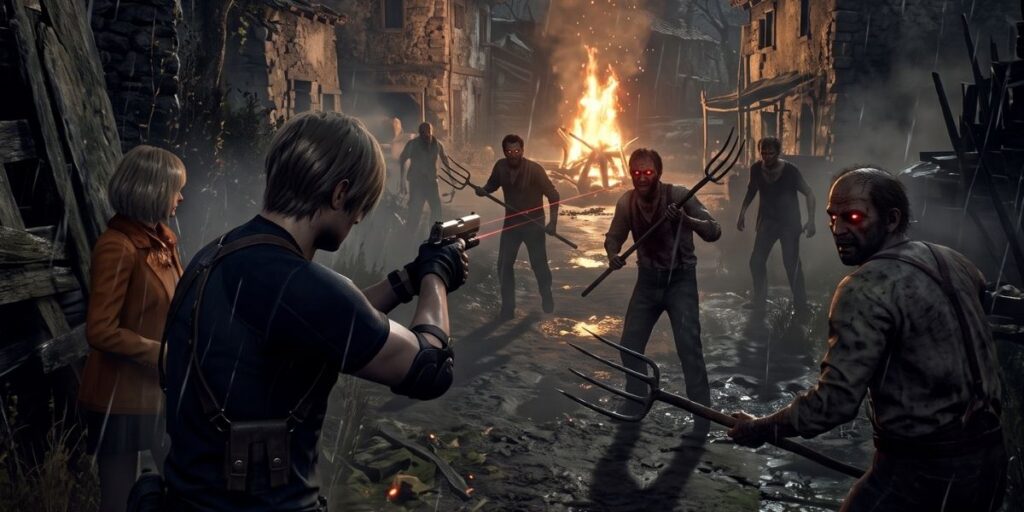
The game that reinvented survival horror, reinvented third-person shooters, and reinvented Capcom, all in one release. The over-the-shoulder camera, the tension between action and resource management, the village siege, the regenerators, the merchant ("What are you buying?") are so deeply embedded in gaming DNA that it's easy to forget they all started here. RE4 was a GameCube exclusive at launch (later ported everywhere), and the 2023 remake proved the original's design was so good that simply updating the graphics was enough to produce another Game of the Year contender. The GameCube version is cruder, harder in some ways, and a monument.
Why you should still play it: you already know. Everyone knows.
The Essential Tier
Super Mario Sunshine
The divisive Mario. Sunshine replaced Galaxy's tight level design with an open, messy, tropical sandbox where half the challenge was fighting the camera and the other half was falling in love with Isle Delfino despite its jank. FLUDD (the water jetpack) divided players then and still does: some see a dilution of Mario's pure platforming, others see the most mechanically interesting movement system in the series. The secret levels (where FLUDD is removed and pure platforming returns) are among the hardest stages in any 3D Mario. Sunshine is the Mario game nobody agrees on and everybody remembers making it one of the best gamecube games of all time!
The Legend of Zelda: Twilight Princess
The dual-release title that launched on both Wii and GameCube. The GameCube version is the one purists prefer: traditional controller, no motion waggle, and the world isn't mirror-flipped (the Wii version flipped the entire map to accommodate right-handed sword swinging). Everything else about Twilight Princess is covered in our Wii games list, but it deserves its GameCube credit: this is where it was designed, and this is how it was meant to be played.
F-Zero GX
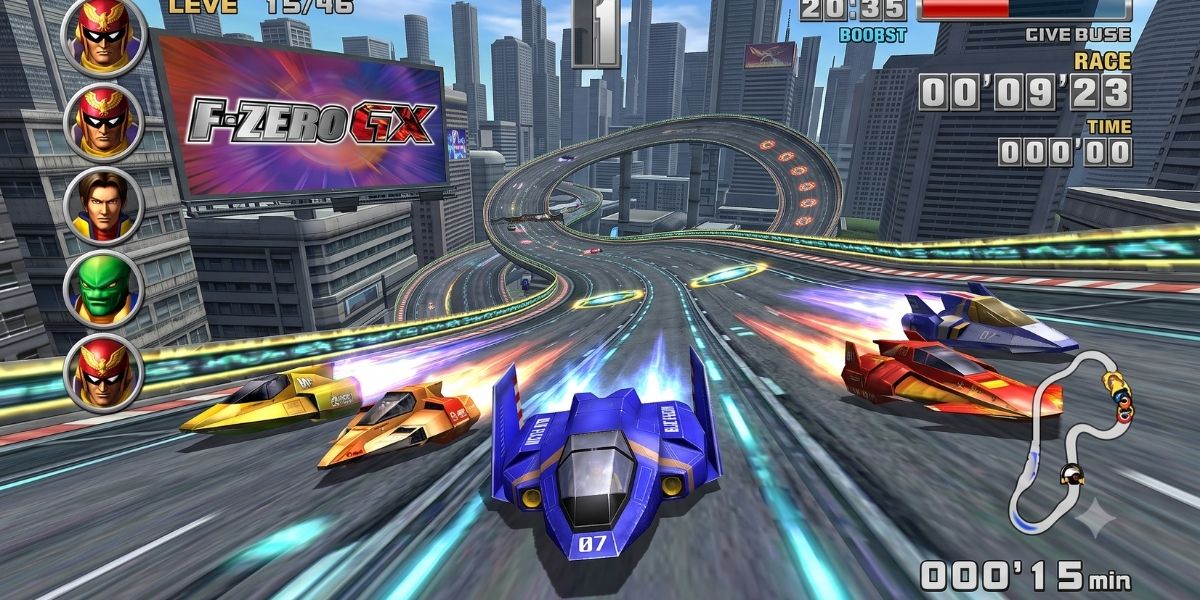
The fastest racing game ever made, developed by Sega's Amususe Vision studio, and still unmatched in its genre two decades later. GX runs at a locked 60fps, features 30 racers on track simultaneously, and reaches speeds so ludicrous that the skill floor for simply finishing a race on the hardest difficulty is higher than most games' skill ceilings. It never got a sequel, which makes it the definitive version of a franchise Nintendo has quietly abandoned. If you want to understand what racing games lost when F-Zero stopped, play this.
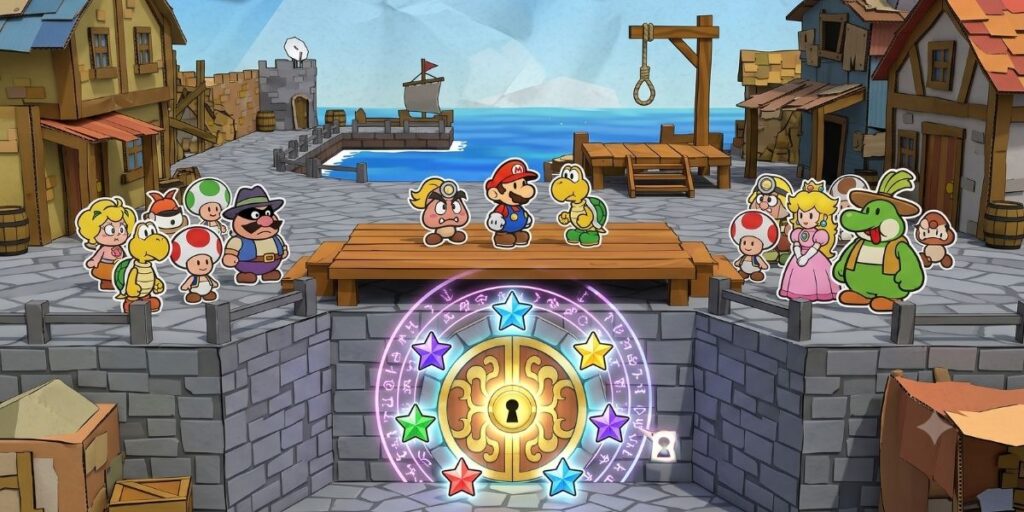
Paper Mario: The Thousand-Year Door
The RPG that proved Mario could carry a story. TTYD is funny in a way Nintendo games rarely attempt (the writing is genuinely witty, not just cute), the turn-based combat has an audience-participation mechanic that keeps every battle interactive, and the chapter structure takes Mario through haunted towns, wrestling arenas, and a murder mystery on a train. The 2024 Switch remake brought it back; the best gamecube games original is where the love started.
Luigi's Mansion
A launch title that taught a generation that Nintendo could do atmosphere. Luigi's Mansion is short, sweet, and drenched in personality: a cowardly Luigi vacuuming ghosts in a haunted mansion, humming the theme song nervously to himself. The portrait ghost designs are some of the most creative enemy concepts Nintendo has produced, and the mansion itself is a puzzle box disguised as a haunted house.
Animal Crossing
The original. The game that started the series that would later conquer the world with New Horizons arrived on GameCube with a real-time clock, seasonal events, and the revolutionary idea that a game could be about absolutely nothing and still be completely absorbing. Collecting furniture, paying off your house, writing letters to animal villagers, and catching bugs at 2 am: the formula was already perfect.
The Deep Cuts
Pikmin 2
The best Pikmin game and a real-time strategy title disguised as a cute gardening simulator. The cave system added risk (no save points underground, lose your Pikmin and they're gone), the treasure collection gave it purpose, and the co-op challenge mode is still one of the best local multiplayer experiences on the console.
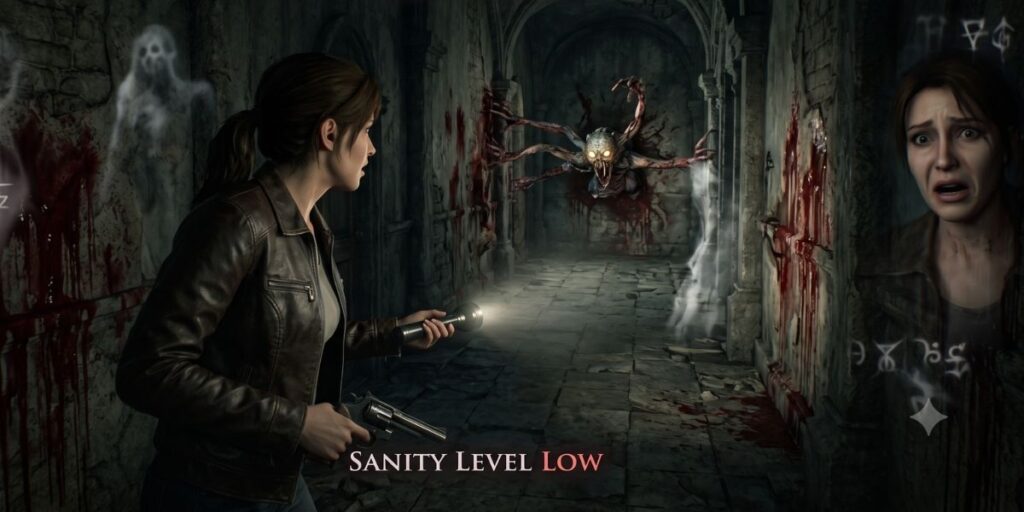
Eternal Darkness: Sanity's Requiem
Silicon Knights' horror game with the sanity meter that messed with the player, not just the character. Low sanity triggered fake error messages, pretended to delete your save file, and simulated the TV turning off. No game before or since has broken the fourth wall with such commitment to genuinely unsettling the person holding the controller. Genuinely on of the most scariest best gamecube games.
Star Wars Rogue Squadron II: Rogue Leader
A launch title that looked a generation ahead of its time. The Death Star trench run in this game, running on 2001 hardware, still holds up as one of the great cinematic gaming moments.
Tales of Symphonia
The JRPG gateway for a generation of Western players. Real-time combat, a sprawling world, and a story with genuine twists made it the entry point for the Tales franchise outside Japan.
The Takeaway
The best GameCube games hold up because the console's commercial failure freed Nintendo and its partners to take risks. Metroid went first-person. Zelda went cel-shaded. Smash Bros became a competitive sport by accident. Capcom reinvented an entire genre. None of these were safe bets, and all of them became defining games.
The lunchbox never won a console war. It just quietly built one of the best libraries in gaming history and let time prove it right.

AKA RogueSignal. PlayStation and Nintendo lead. 130+ platinums, every mainline Zelda finished twice, and a rule he never breaks: don’t publish on a game you haven’t completed. Specializes in narrative-driven games, RPGs, and the kind of completionist runs that make people ask if he’s alright. Learn More About Micah